It's only countercultural until you win
RIL: End of Year Letter (2025)
Friends,
The environment is shifting. Some startup builders and backers see it. Most don't.
At least $98 billion in data center projects blocked or delayed in 2025. Enterprise buyers are asking governance questions earlier. Red and blue states are wary of AI. More than 700 AI bills were introduced in American states alone in 2024, with over 1,000 in 2025. Candidates in both parties are running against tech. One Pennsylvania official put it bluntly: "People are really pissed off. They're like, 'I'm sick of this [expletive]. I don't get anything out of this.'"
This isn't a blip. Some points of friction will pass. But the costs to founders won't. You can build for the environment you're actually in or the idealized one from last year at this time. Only one of those is a strategy.
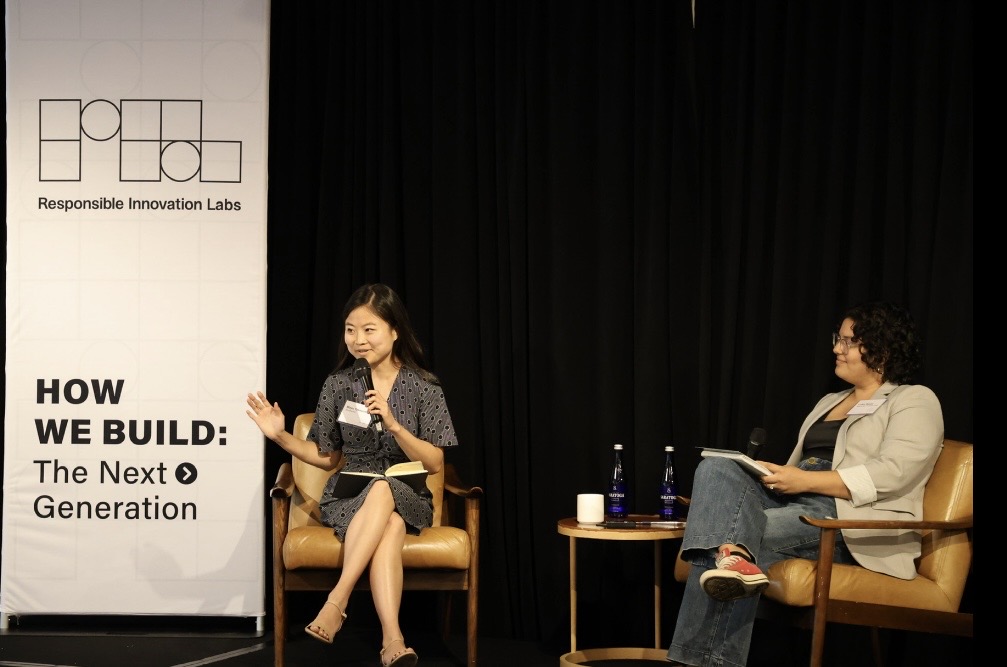
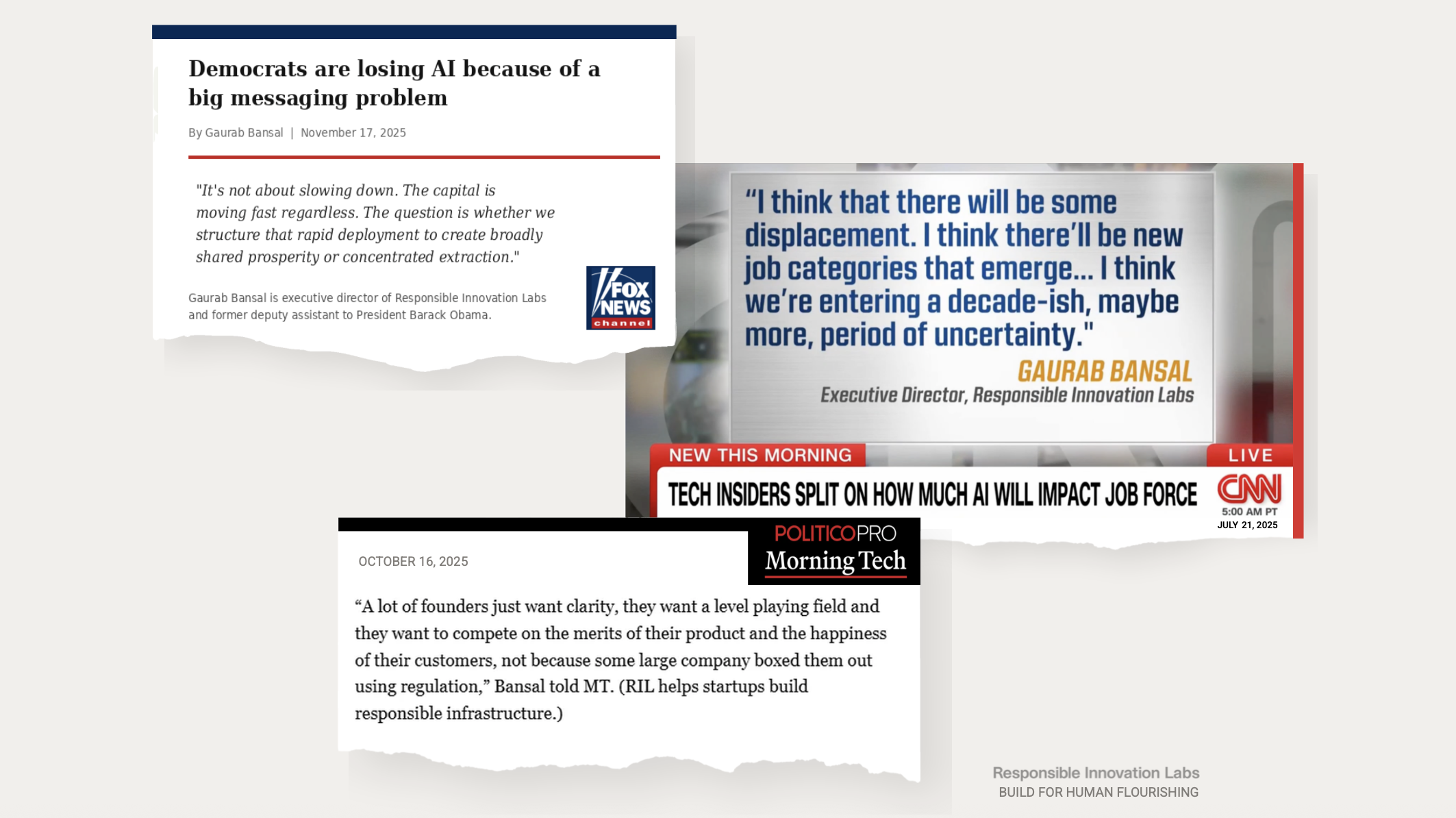
I run Responsible Innovation Labs (RIL). In 2025 we served 200+ founders. Our programs and workshops earned an NPS above 8/10. We launched EDGES, our flagship summit, with 130 founders, investors, policymakers in one room. We convened a startup-specific AI and Workforce Symposium attracting 70 leaders including a former National Security Advisor. We built playbooks with YC and Techstars alumni to make it easier for founders to make responsible innovation workflow native. CNN, Politico, Fox News covered our work. We deepened relationships with policymakers in Sacramento and Washington, DC.
RIL exists to help founders make better decisions, faster. We're builders helping builders see around corners. Our roles are coach, convener, and critical friend. Our purpose is to give you honest feedback, not blind applause. This is the founder infrastructure no one else is building.
We had a number of successes growing the RIL founder community this year. I also got a few things wrong in 2025.
First, I underestimated how much founders want concrete practices. Not just communities or dinners. Not just access to new relationships. Founders want methods and workflows they can use tomorrow morning. Our most hands-on offerings were our highest rated. Founders asked for tools derived from and built for real operating contexts. We're building more of these as we go into 2026 to meet demand.
Second, I thought 2025 would be a fight for RIL’s survival. The conventional wisdom said the window for responsible innovation had closed. Some of our earliest champions went quiet. We prepared for a down year. But then more founders showed up than ever. Thankfully, great founders don't overindex on conventional wisdom.
Third, I underestimated how pressing the workforce impacts of AI would be to startups. We piloted a symposium because the issue matters, not because I was confident it would resonate. It did. The questions about what happens to workers when AI deploys aren't abstract policy debates. They're product decisions, go to market decisions, resource allocation decisions, and storytelling decisions. This will be a pillar of our work going forward.
Here are a few early predictions for 2026. I hope I'm wrong about the first two.
We'll see more state legislative action on AI, not less. The recent Trump administration executive order won't slow down state activity. In our federal system, states want to act for a mix of substantive, regional, and, yes, political reasons. Only true federal preemption with meaningful federal rules of the road will help startups. Founders will continue to navigate American regulatory complexity in 2026.
Candidates will run against AI. It's shortsighted, but public perception of AI means it could be a winning narrative. Data center opposition surfaced this past November in elections in Virginia and New Jersey. In 2026, expect more candidates in both parties to tap anxiety about jobs, energy costs, and crony capitalism. Years of declining public trust in tech are closer to becoming an electoral reckoning. That's not good for startups who believe, as we do, that AI and emerging tech can advance human flourishing.
Founders who see where the puck is going will have an advantage. The ones who anticipate the questions resulting from this new environment will look more prepared. This prediction is evergreen, but the shifting environment makes it more immediate compared to a year ago.
One founder told us this year: innovating responsibly is "not a constraint… it's your moat." A moat isn't a burden. It's what keeps distance between you and your competitors.
What I find valuable to ask founders: What surprises you about the reactions to what you're building and how you're choosing to build it? Customers, employees, investors, regulators, and communities all want something from you. You're under pressure from every direction. You've got to move quickly. But also make the "right" decisions when there isn't a clear-cut path forward. If you're caught off guard, your competitors who saw it coming are already ahead.
To investors: Your founders are making hard decisions on how to innovate responsibly with or without you. The ones who see what's forming on the horizon will reach their exits with less friction. The ones who don't are carrying baggage that will show up in headlines, diligence, and unnecessary spending unrelated to product. If you're not sure whether you or your portfolio companies are ready for the questions coming, we should talk.
In 2026 RIL will launch city cohorts for founder fellows. We'll offer more coaching. We're writing new case studies based on companies navigating tradeoffs as responsibly as they can. We'll build more rooms with policymakers, with other founders, and with enterprise buyers and unlikely collaborators. RIL will deepen our efforts to support founders navigating the impacts of their tech on work and workers. On that note, we'll convene our next symposium on January 14, 2026 in Washington, DC (with more elected officials to participate). Email me to request an invitation.
To the founders, operators, and investors who showed up when the conventional wisdom said don't: thank you. To the funders who backed us early: you made this possible. To the partners who build with us: we see you and we’re grateful for your collaboration.
This work compounds on trust. Thank you for extending it.
Every founder I’ve met shares an impulse that is universal and beautiful: they want to build something consequential, delight their customers, and solve real problems. Whether you’re new to RIL or have been an early supporter, you’re trying to take something imperfect and make it better.
For technology to truly advance human flourishing, how you build matters as much as what you build. Let’s be honest, believing in responsible innovation is countercultural in tech. One founder builds this way. Then two. Then ten. That's how it starts.
It's only countercultural until you win.
Onto 2026,
Gaurab

View the article here.
Additional Resources and Tools
Get started on the things you can control: