Takeaways: How We Build Data Centers & Energy Infrastructure
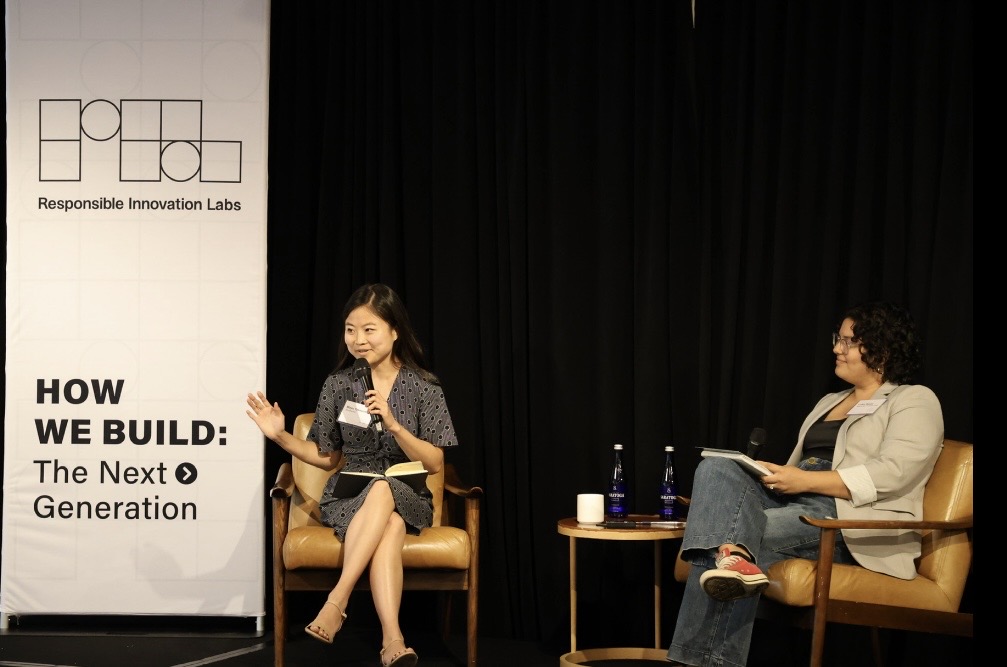
Key takeaways from a cross-sector convening on data center siting, clean energy infrastructure, AI and community trust — featuring startup founders, labor leaders, policymakers, investors, and civil society. Hosted by RIL at KQED in San Francisco on June 22, 2026.
How We Build: Data Centers & Energy Infrastructure
Communities in 35 states are pushing back on data centers, making them among the most contested building projects in America. The debate isn't pro versus anti-AI. It runs through power grids, water supply, land use, and community trust — and it's moving faster than most builders are prepared for.
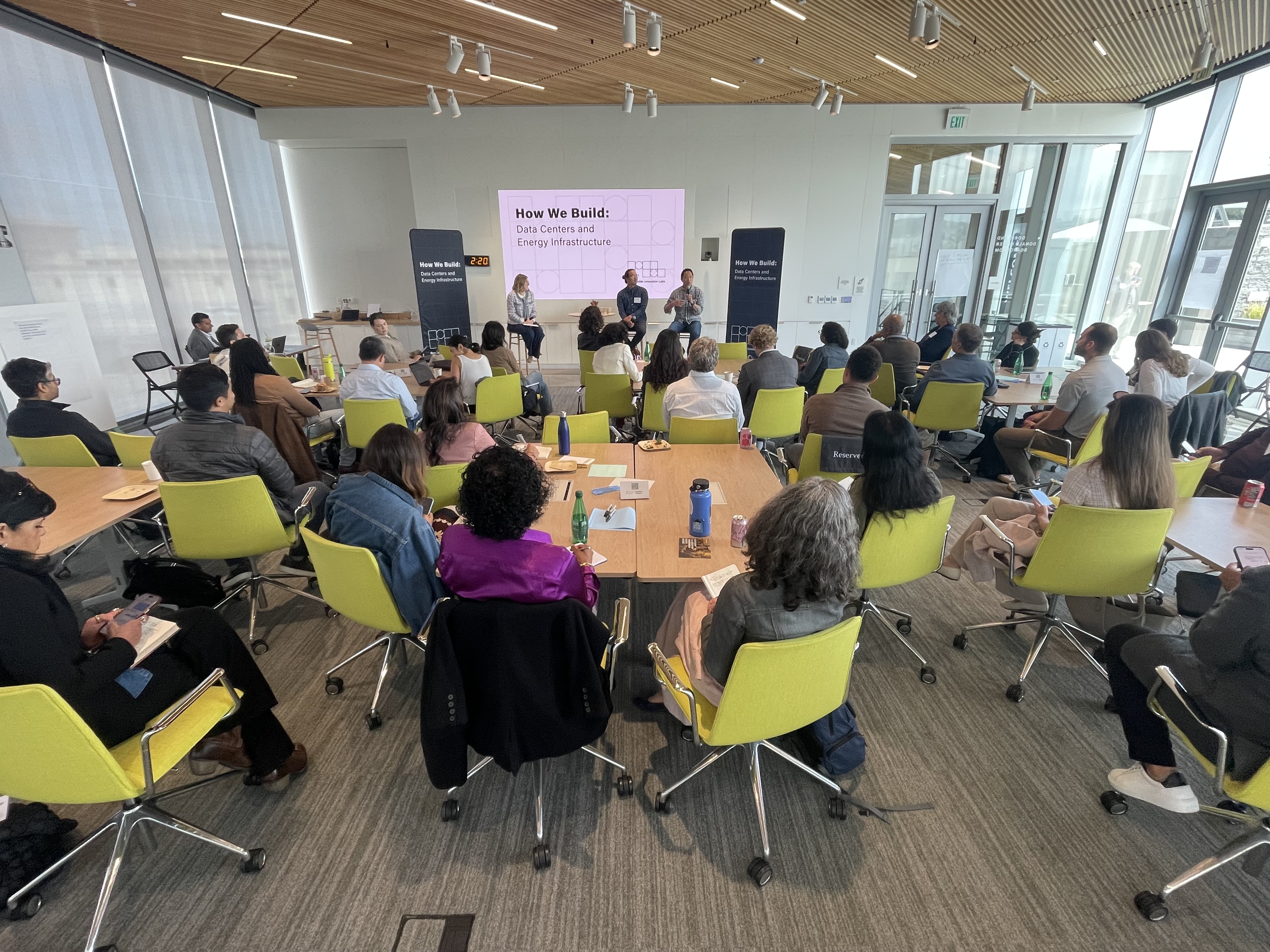
On June 22, 2026, RIL brought together founders, investors, labor leaders, policymakers, and community advocates in San Francisco for How We Build: Data Centers & Energy Infrastructure. This was a cross-sector convening to work through the real tradeoffs shaping the AI infrastructure buildout. The politics don't break along familiar lines. Labor unions are among the strongest proponents of data center development. Local officials are caught between promised jobs and constituents demanding answers on rates, water, and disclosure. Nobody resolves this level of tension in an afternoon. The point was to understand what's actually on the table — and build the relationships that make the next decision more sound. Below are five takeaways from the room.
Five takeaways, consistent with Chatham House.
First, this room was rare. You came as startup builders, investors, labor leaders, policymakers, funders, community advocates, and skeptics. So many competing views seldom share one space, stay in the conversation start to finish, and then hang out afterwards. Thank you for bringing candor and constructive disagreement to a hard conversation. Onto the takeaways, which will inform how RIL maps our go forward work.
1. The politics of data centers are local, and clean energy is one of the strongest levers.
The fight is local, and clean energy boosts community interest in hosting a new data center. National support is soft and could break either way. It flips negative the moment a project lands in someone's backyard. Communities do care about jobs, rates, and tax revenue. But one of the biggest levers for winning their support is a green power source. A fossil fueled project stays unpopular, even in places whose economy runs on those same fuels. The same project on clean energy polls sharply positive in the data we heard presented. People see AI as Washington's job. They see the terms for letting a data center into their neighborhood as local.
People judge AI and the data center separately, for now. Today people file AI under national politics and the data center under local ones. We do not have definitive data to say whether that divergence will continue. If sentiment toward AI and sentiment toward data centers start to converge, the whole playbook will change for companies, large and small. Something to watch.
Affordability is a dominant fear, and it can cut both ways. Utility bills come first for most people. Power prices have climbed since before the AI boom, pushed by old grids and inflation, and the data center is the new arrival that is assigned the blame. The room named the other direction too. When hyperscalers fund grid upgrades and the costs get shared broadly, a big new load can push rates down instead of up. Whether it works out that way depends on the deal, and advocates are right to push for accountability on promises made. Fear is the default story, but it doesn’t have to be the only one.
The backlash runs on a lack of trust. Builders who exploit loopholes harm people, break trust, and make it harder for good actors to build anywhere. Communities know what a broken promise feels like, and that is truest for neighborhoods long stuck on the wrong side of a highway or a chemical plant.
2. Earning a community's yes is relationship work, and it starts early.
Winning a community is not always about persuasion. Some places already want these projects and see real economic opportunity in them. The work then is to find those communities, learn why they want a new project, and give them the tools to judge a project on their own terms: what it does, what it costs, and what it returns. Several people made the same point from the other side. They went looking for public examples of communities that welcomed a project and did well by it, and could barely find one, while cautionary tales are everywhere. The good version of this work is invisible, which is part of why fear sets the terms.
Doing right by a community turned out to be the quick path, not the slow one. The founders who do this well start by listening. They sit through many community meetings, ask real questions, and treat the first meeting as the start of a long relationship, not a deal to close. One project came out of hundreds of these meetings and got permitted and built faster than most people expected. Engaging early also means bridging with groups whose interests line up with yours, even when they do not look like obvious partners. Labor is the clearest example. Local officials and the workers who stand to gain are others.
Read the room before you draw up the strategic plan. Communities can tell the difference between a real investment and a token. A park is not a serious answer when a multi-billion-dollar facility moves into a district where schools are closing. Learn what a place actually needs before you propose what you will give it in a community benefits agreement. The deal goes faster when it reflects what the community would have asked for anyway. One caution for our tech-heavy room: engagement cannot end at groundbreaking. It has to run the life of the project. And local government can move fast, faster than people expect, when there is a real partner across the table. The frustration is not speed. It is being handed a finished plan and a press release instead of being brought in while the decisions are still open.
3. The closest allies and the real upside are both undervalued.
The jobs argument is a career, not just a job count. What resonated wasn’t the buildout jobs, which are real but temporary by design. It was the path, and the transferable set of skills that come with it. A worker moves from project to project and gains a trade, a pension, health care, and a way into the middle class. That matters most in places where a minority of young people finish college and few industries offer a climb to middle class life. The skill is the asset, not any single job. That reframes the labor conversation from "how many jobs" to "what does this let people build over a career."
Labor is local political and community intelligence, and almost no startup thinks to call them. These are people who know the council members, understand the permitting fight, and can show up to a hearing in numbers. They are not a cost to manage late. They are a partner to enlist early, and very few builders, especially startups, have thought to call them.
Startups can make the responsible option the efficient one. The fastest new power is the capacity we already own and waste. One point made the efficiency gap vivid. The human brain runs on about twenty watts, while the hardware chasing the same kind of work runs on far more. There is enormous room to make compute more efficient, and the firms that get best at turning electricity into useful work will win. Others showed how to find power that already exists and sits idle, like the batteries in electric cars, and put it to work for the grid. You cannot manage what you cannot measure, so better instruments let operators see the sudden swings in demand that grids were never built for, and run their power and compute harder. None of this waits on new permits or new plants. It shrinks the footprint that draws opposition in the first place. It also starts to break the false choices communities get handed, clean or fast, affordable or responsible, by making the responsible option the efficient one.
4. What one convening cannot settle, and the conversations that come next.
The bottleneck is coordination, not capital. Private capital is abundant, yet much of the planned capacity is still not in the ground. The constraint is permitting, grid interconnection, and the number of players who all have to move before a project can start: utilities, regulators, hardware makers, customers, and community leaders. This is a market design problem. Smaller inference sites on local grids could ease it, but getting everyone to move together remains the harder problem.
No single afternoon covers all of it, and some threads we did not reach. National security is the clearest one. If compute is not available at home, we will come to depend on others to supply it, and some of those suppliers are neither democracies nor friendly to American interests. That interest is real, and it pulls the discussion in a different direction. The pressure to build fast to further our national security is the same pressure that runs over a community. We do not think you resolve that by picking a side. We have to sit with that tension and act, building well and fast without running over the community to do it. It deserves its own convening, alongside the other themes we could not do justice in one sitting.
The room was missing people it needed, and that informs what comes next for RIL’s convenings. We invited hyperscalers and utilities. They pick the sites, sign the agreements, and decide where the power comes from, and many of the day's asks were pointed at them. We will keep working to bring them into dialogue. The absence that mattered most was a frontline community voice. We spent the afternoon on what communities fear, want, and should ask for, while the residents who live next to these projects spoke through others, not for themselves. People with the most at stake belong in the dialogue, not just represented in it.
5. Many open questions, and the work RIL is taking on next.
A week on, we are sitting with a question about where accountability belongs. This was the source of the healthiest tension in the room. Should the burden fall on communities, who often negotiate without information or power? Should it fall on the builders to bring better deals? Some argued communities have real leverage right now. Others called it a seesaw, with neither side keeping a durable advantage, and warned that whatever leverage exists today may not last. What is not in dispute is the gap communities face in power, information, and money next to the market actors across from them.
These takeaways are a map of our work, and RIL is picking up several threads with you. The room showed that founders, labor, mayors, investors, community advocates, and skeptics can stay in one conversation and get somewhere. That collaboration between strange bedfellows is central to RIL’s mission and philosophy. Channeling a constructive afternoon of dialogue into tangible narrative and practice guides is how we work.
Three threads we’re exploring with the people who raised their hand at our How We Build event:
- A builder's guide to earning a community's yes. The gap is the builder's side of the table. Good community-side playbooks already exist. A frontline guide from the NAACP and a new wave of toolkits give residents sharp questions. We will not duplicate them. What is missing is what a startup founder and other builders should know before the first community meeting, not after. This guide would be for founders putting something physical into the ground, the neocloud and compute companies siting facilities, the energy and grid startups making them run leaner, and the power builders who are often part of the solution to community concerns. It is squarely the work RIL already does with founders, focused on this generational buildout of data and energy infrastructure. We are exploring where we can uniquely contribute.
- Case studies of what good looks like. Several of you went looking for public examples of communities that welcomed a project and did well by it, and came up short, while cautionary tales are everywhere. We will find them and tell them. Not only data centers. The same problem faces anyone scaling frontier technology that has to be built in a real place, from clean power to carbon removal, and some of the best examples of engaging productively come from those stories. The good version of this work is often invisible, and that is part of why fear sets the terms. We want to change what is visible.
- More rooms, with more of the right people in them. We will keep convening, take up the threads we could not reach in one afternoon, national security among them, and keep working to include the voices we were missing last Monday.
We are working on a shareable version of the polling data from last Monday.
If we got something wrong or missed what mattered most to you, tell us.
And if you want to collaborate, whether on any of these ideas or something else, reach out.
With gratitude,
Gaurab & Team RIL
View the article here.
Additional Resources and Tools
Get started on the things you can control: