Takeaways: How We Build The Next Generation | AI and First Jobs
Key takeaways from a cross-sector convening on AI, early-career workers, and the future of entry-level work — featuring policy staff, researchers, labor leaders, founders, and enterprise leaders. Hosted by RIL in Washington, D.C. on July 9, 2026.
How We Build: The Next Generation
Since about 2023, hiring into entry-level, AI-exposed roles has softened — concentrated among the youngest workers, starting in tech and spreading across the broader economy. The trend has not reversed. The usual answers don't fit. Reskilling assumes a destination no one can name yet. A safety net assumes the problem is a missing paycheck, when what's going missing is the entry-level job itself.
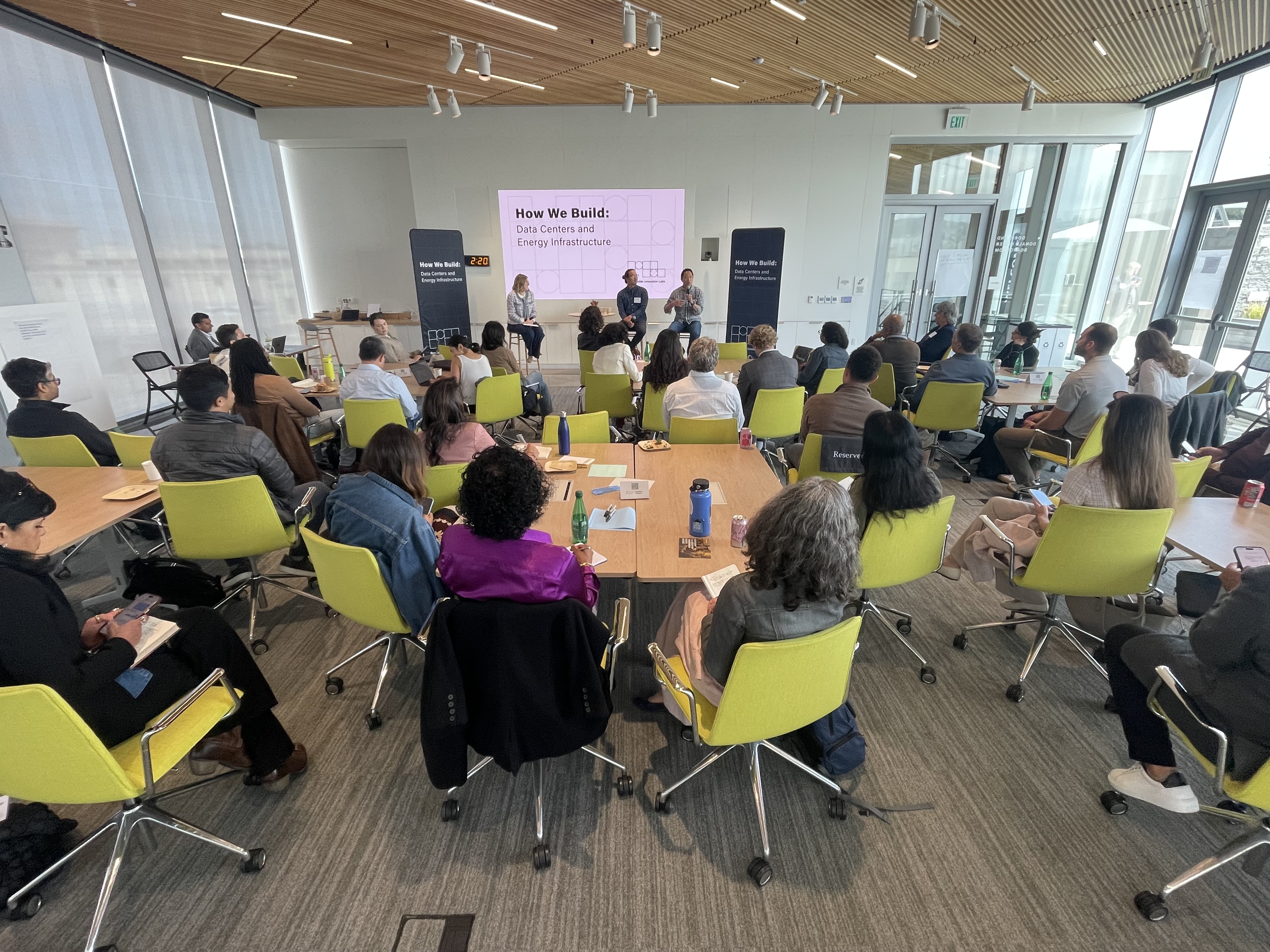
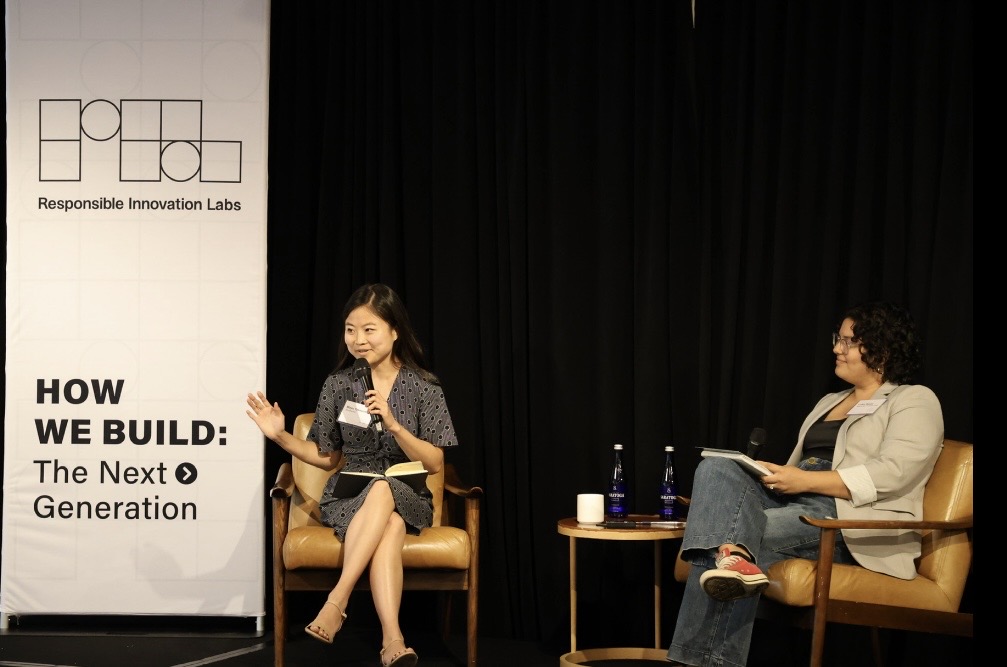
On July 9, 2026, RIL brought together bipartisan policy staff, labor leaders, think tank researchers, advocates, investors, founders, and enterprise leaders in Washington, D.C. for How We Build: The Next Generation. This was a cross-sector convening to work through what AI's impact on early-career workers actually means and what to do about it. Some in tech have responded to hard questions about AI and jobs with super PAC ads. People across Washington, in both parties, want to take these questions more seriously. The point was to get them in a room to wrestle with it instead of talk past each other. Below are the takeaways from that conversation.
Five takeaways, consistent with Chatham House.
The mix in the room shaped what we learned. Researchers, labor leaders whose unions represent millions of American workers, Hill staff and state government leadership from both parties, startup founders, investors, and educators stayed in one conversation about first jobs from start to finish. Here are five learnings we took away from our time together:
1. Entry-level hiring in AI-exposed jobs is slowing, and the decline is measurable month by month. Whether it continues remains to be seen.
- Monthly payroll records covering millions of workers, current through spring 2026, show no economy-wide collapse in AI-exposed work. The decline concentrates among the youngest workers.
- Employment for workers aged 22 to 25 in the most exposed fifth of occupations grew 19 percent slower than in the least exposed fifth. After accounting for interest rates, education mix, and remote work, the gap narrows to about 9 percent.
- Either way you cut it, that is a signal that suggests entry-level work for many young people is more elusive. Mid-career and senior workers in the same occupations have kept gaining.
- The pattern extends to newer firms: AI-native startups run with about 25 percent fewer employees, a 15 percent lower share of junior staff, and a higher share of engineers.
- Researchers were careful to call all of this descriptive rather than causal, while noting it would be surprising if AI were contributing nothing.
- A public dashboard now updates these figures monthly, so the debate over whether this is fact, fiction, or vibes can now run on data, even if from one large sample.
2. AI is removing tasks that taught junior employees “the job” and gave senior leaders insights into how the work was going.
- Entry-level tasks are the most exposed to automation, a finding confirmed by both the data and conversations with employers.
- Work thought of as tedious in fact functioned as on the job training for junior employees. That work simultaneously informed senior leaders about performance. Automation threatens to cut both channels at once.
- One leader who runs apprenticeship programs reminded us that drudgery was never just drudgery, it was how people learned a business or field, so where does that learning happen now?
- A union leader made the same point from a different perspective. Reading student work is one of the richest feedback signals a teacher gets about what is happening in the classroom, and outsourcing it to a machine summary weakens that feedback loop.
- Potential fixes converging from different corners may try to rebuild apprenticeships (formal and informal) outside entry level jobs. The group discussed:
- whether apprenticeships can be redesigned so that two years of seat time delivers three to five years of experience;
- whether a residency model for so called “white collar” fields can be borrowed from medicine;
- the importance of looking at careers as lattices instead of ladders;
- how credit can be given to candidates for adjacent skills and life experience (e.g., we heard from one participant about nail technicians having strong skill adjacency to semiconductor technicians); and
- new pathways from trades to related professions (e.g., a participant cited <10% percent of electricians become electrical engineers).
3. Firms have a rational reason to skip junior hires. A country that stops producing experienced workers pays for it eventually.
- A founder named the incentive directly. Tasks that took three weeks are now expected by the end of day, and if a senior employee with AI can do more, why post the junior role? He also argued that the country needs junior employees hired, and he did not offer an easy resolution.
- Firms have not found their equilibrium; at least one major company announced it would stop hiring interns, then reversed at scale within a year.
- One measure worth tracking is which positions never get backfilled after AI-linked layoffs.
- The open question is whether hiring that looks rational to each firm puts the country, in aggregate, on a path where we stop producing experienced workers and leaders. This could be a future “China shock”, but self-inflicted.
4. The data show which workers are getting hit. No one can yet measure whether they land in good jobs.
- Some researchers expect reallocation rather than an indefinite decline in youth employment: fewer young people in exposed jobs, more in growing fields.
- Whether that reallocation delivers good wages and access to a middle class (or better) life is a question we should be tracking. The one early read we have is not reassuring, since demand for AI-exposed online contract work has already fallen significantly.
- Much of what we would need to know is currently unmeasured. Federal employment records do not track occupation. To the group’s knowledge, nobody had publicly measured how students are changing majors and career plans in response to AI until recently and not yet at the systematic level needed for policy making.
- Federal data collection rules aren’t helping. For example, the Paperwork Reduction Act slows any potential fix, because surveying more than ten people triggers a notice-and-comment process that adds six to nine months. We’re slowing down the government’s own ability to track impacts on American workers.
5. AI adoption depends on trust, and workers have knowledge and judgment builders need.
- Trust surfaced unprompted in every conversation. In one public sector union's internal surveys, 80 to 90 percent of respondents reported that no one in leadership had ever discussed AI use with them. In the case of school districts, it was noted anecdotally that teachers have been warned that any use or experimentation with AI could threaten existing legal protections.
- Adjacent to proposed AI bans, other tech bans have so far produced a mixed record. For example, some research on school cell phone bans has found no meaningful gains in student academic achievement.
- Culture eats strategy. A Big Tech engineer at a teacher symposium remarked that "your teachers really know a lot about teaching," a comment that shows the distance between the people building these tools and the people using them.
- Inside legacy companies the friction is just as real. One founder is experiencing multiple months of meetings to get a single test completed, concluding that it would be easier to build a new business in parallel rather than transform a legacy business from within.
- A consultant working with both a state government and community organizations described watching two slow-moving trains approach from opposite sides, and she found the room's tempered approach a useful contrast to the frenetic energy elsewhere.
- The gap between what AI models and applications can do and what institutions adopt will set the pace of the next several years
What one afternoon can’t resolve, and where policy has the opportunity to move now.
The group didn’t resolve how much of the youth signal is AI versus other causes, whether reallocation will deliver good wages or just different jobs, or who pays for the transition (let alone whether that disruption will be low, medium, or high scenarios).
It did converge on where policy can move now: no regrets measures like portable benefits and health insurance not tied to employment, narrower bills might have a better chance of passage compared to sweeping legislation, and apprenticeship reauthorization as live bipartisan areas of mutual interest.
One international comparison was particularly salient. Where workers have strong bargaining, real safety nets, and employer-funded retraining, public sentiment on AI runs positive.
Security changes what people are willing to try. So does teaching: one professor in the room described moving from banning AI to teaching students to use it as a critical thought partner.
What we need to measure, and what Responsible Innovation Labs (RIL) is doing next.
The room's most concrete agenda item was also the plainest: fix the data. That means occupation tracking in federal employment records, systematic data on student major and career choices, real time employer demand signals, and non-backfilled positions after AI-linked layoffs.
RIL is putting its own resources against parts of this gap. We are fielding a survey of startups, building a playbook for them, and continuing our sensemaking work with AI builders, deployers, policymakers, and the workers and communities living this transition. Most startup founders never learn to talk to workers because the buyer is not the worker. RIL exists to close that gap, and we welcome your help and ongoing collaboration.
Let us know what we missed or if you reached different conclusions.
Thanks again for joining us. Be in touch with your thoughts on any follow ups top of mind for you.
Best,
GB
View the article here.
Additional Resources and Tools
Get started on the things you can control: